

Topic 01 of 13
Best for: developers and SEOs who own the site
Technical SEO
The health of the site itself: crawling, indexing, rendering and speed. Whether a page can rank at all.
00
- Articles
- 0
- Shelf
- Search
- Last updated
- –
Start here
The pillar guide · 6 chapters
Technical SEO, end to end
Search engines and AI answers can only rank what they can reach, understand and trust. Work through these six layers in order. Each chapter links to the deeper articles.
01
Chapter 011 article
Crawlability
Can search engines reach every page that matters?
Before anything can rank it has to be found. Crawl access is controlled by robots rules, sitemaps, internal links and server responses, and small mistakes here quietly hide whole sections of a site.
What to check
- robots.txt blocks nothing you want ranked
- XML sitemap lists only 200, indexable, canonical URLs
- Important pages sit within three clicks of the homepage
- No redirect chains, soft 404s or 5xx spikes in server logs
02
Chapter 02
Indexing and canonicals
Is the right version of each page in the index?
Being crawled is not being indexed. Canonical tags, noindex rules, duplicate content and pagination decide which URL is kept, and which signals get consolidated onto it.
What to check
- Every indexable page has a self-referencing canonical
- Filters, search and tracking URLs are consolidated or excluded
- Noindex is used on purpose, never left over from staging
- Search Console coverage shows no unexplained exclusions
03
Chapter 03
Rendering
Does the page work without relying on the browser to finish it?
If key content or links only exist after JavaScript runs, indexing becomes slower and less reliable. Server-side or static rendering keeps the important parts in the first response.
What to check
- Main content, links and metadata are present in the raw HTML
- Lazy-loading never hides above-the-fold content or links
- URL Inspection shows the rendered page matches what users see
- Blocked JS or CSS files are not stopping Googlebot
04
Chapter 04
Speed and Core Web Vitals
Is the page fast for real users, not just in a lab test?
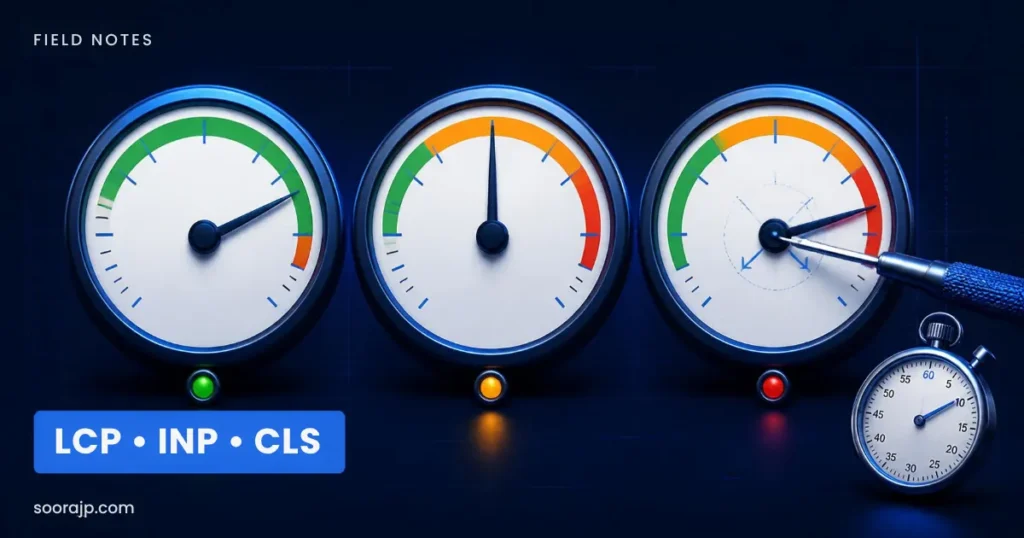
Core Web Vitals measure loading, responsiveness and visual stability in field data. Fix them in order of payback: largest contentful paint first, then interaction delay, then layout shift.
What to check
- LCP under 2.5 s on mobile in field data
- INP under 200 ms on key templates
- CLS under 0.1, with image and embed sizes reserved
- Images are modern formats, sized and cached correctly
05
Chapter 05
Structured data
Does the page say what it is in a language machines trust?
Schema markup labels people, products, articles and answers so engines can show rich results. It only holds value when it matches visible content and survives theme and template changes.
What to check
- Organisation, Article and Breadcrumb schema validate cleanly
- Markup matches what is visible on the page
- Schema lives in the template layer, not in page content
- Rich-result reports show no new errors after releases
06
Chapter 06
AI and citation readiness
Can AI answer engines read, trust and quote you?
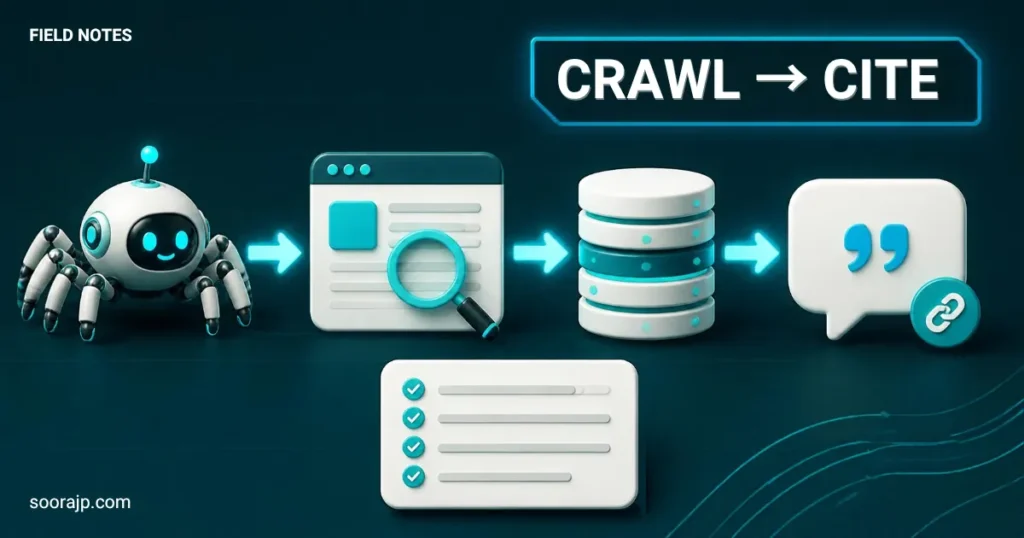
Answer engines favour pages that are crawlable, clearly structured and honest about their sources. Technical foundations decide whether you are even eligible to be cited.
What to check
- AI crawlers you want are allowed in robots.txt
- Each page opens with a direct, quotable answer
- Entities, authors and sources are named and linked
- Brand mentions are sampled monthly across answer engines
Self-audit
Score your own site. 18 checks
0/18
Tick what is already true for your site.
Crawlable
0/3Indexable
0/3Rendering
0/3Fast
0/3Structured
0/3Citable
0/3
Common questions
Asked on every audit
What is technical SEO, in one sentence?
It is the work that makes a site easy for search engines and AI answer engines to crawl, render, index and understand, so that good content can actually be found and ranked.
How is it different from on-page SEO?
On-page SEO is about what a page says and how it targets a query. Technical SEO is about whether the page can be reached, rendered and indexed at all, and how fast and stable it is for users.
How often should I run a technical audit?
Run the full checklist at least twice a year, and a quick pass after any redesign, migration, CMS or hosting change. Watch Search Console weekly in between.
Do Core Web Vitals really affect rankings?
They are a lightweight ranking signal, but a heavy factor in user experience and conversions. Treat them as a way to protect revenue first and rankings second.
Does structured data help with AI search?
It helps engines understand entities and relationships, and it can make rich results possible. It is not a guarantee of citations, so pair it with clear, answer-first content.
Can I do this without a developer?
Many checks, such as sitemaps, canonicals and metadata, can be handled in a CMS. Rendering, speed and template-level schema usually need a developer or an engineer-led SEO.
Shelf status · empty
This shelf is still being written
Nothing has been published in
Technical SEO
yet. Subscribe and the first note lands in your inbox the day it goes live.
0 articles in
Technical SEO
The full shelf
Nearby shelves
If you liked this, read these
Latest from topics that sit next to Technical SEO.
Next topic · 02 of 13
SEO
Strategy, search intent and content. What to publish, how to write it and how to make it compound.
Explore 0 articles
The library
Other shelves
00
0 articles
00
0 articles
00
0 articles
00
0 articles
00
0 articles
00
0 articles
00
0 articles
00
0 articles
00
0 articles
00
0 articles
00
0 articles
00
0 articles
00
0 articles
00
0 articles
The newsletter · Technical SEO
Never miss a Technical SEO note
New articles and short field notes, every other week. No spam, unsubscribe any time.